
The Enchanted Forest: Decorating a Mushroom-Themed Tree with Vintage Soviet Ornaments
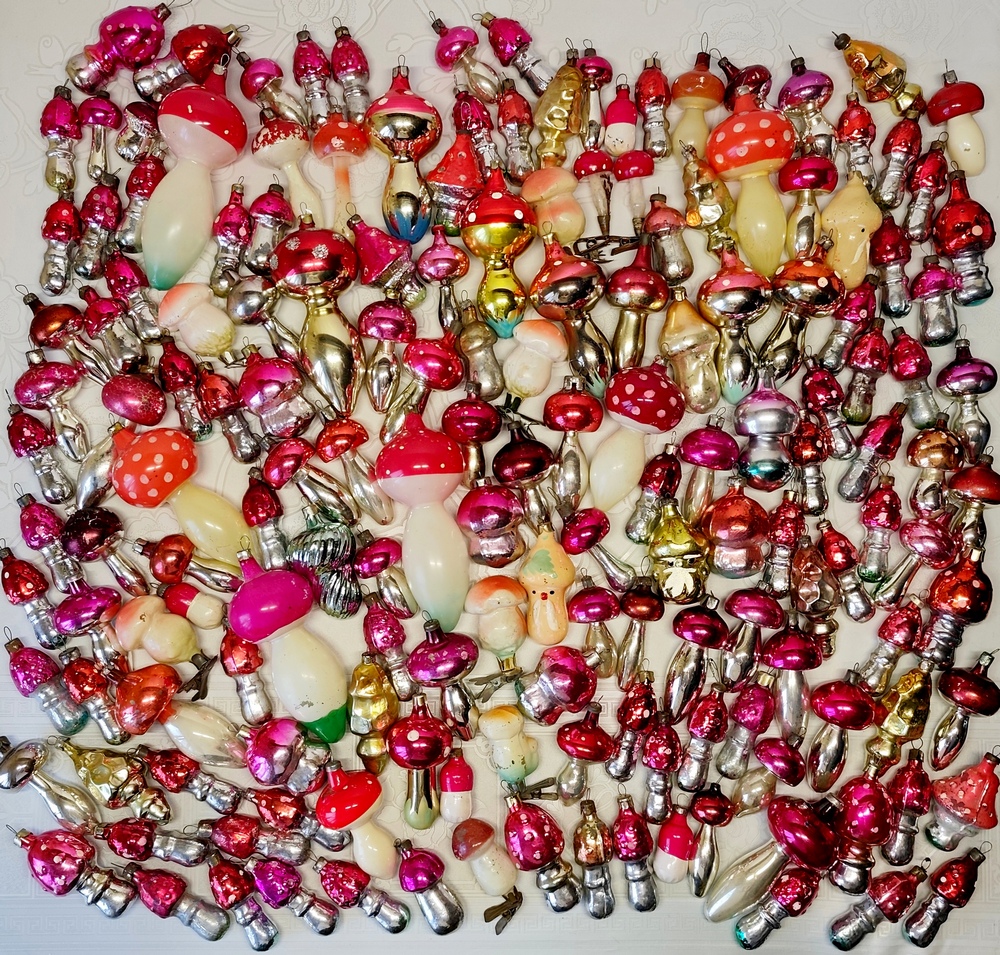
When we think of a traditional Christmas tree, we often imagine classic round baubles and tinsel. However, for collectors of vintage Soviet glass ornaments, there is a much more magical and "earthy" alternative: the Mushroom Tree.
In the mid-20th century, Soviet glass factories produced an incredible variety of botanical-themed decorations. Among them, the mushroom remains the most iconic. Today, creating a "Mushroom Christmas Tree" is a major trend in the Cottagecore and Mid-Century Modern communities.
The Incredible Variety of Soviet Glass Mushrooms
The diversity of Soviet mushroom ornaments is truly astounding. If you are planning to decorate a themed tree, you aren't limited to just one style. The USSR artisans captured the essence of the forest in thin, hand-painted mercury glass.
1. The Iconic Amanita (Fly Agaric)
The bright red cap with white polka dots is the superstar of any vintage collection. These were produced in dozens of variations—on wire stems, on metal clips (clip-on ornaments), and as hanging baubles. They add a necessary pop of color to the green pine branches.
2. The Noble Porcini (Boletus)
For a more realistic "woodland" look, collectors hunt for the White Mushroom or Porcini. These often featured "frosted" caps to simulate dew or light snow, reflecting the quiet beauty of a winter forest.
3. Anthropomorphic Mushrooms (Mushrooms with Faces)
Perhaps the most charming and rare category is mushrooms with faces. These character ornaments turn your tree into a scene from a fairy tale. With hand-painted eyes and smiles, these "Mushroom People" were often inspired by Soviet folklore and animated films.
4. The Unique Morels (Smorchki)
For the advanced collector, the glass Morel (Smorchok) is a prize. Its intricate, brain-like texture was difficult to achieve in glass, making these ornaments a testament to the skill of the craftsmen of that era.
5. Simple Forest Mushrooms
Sometimes beauty lies in simplicity. Small, unpretentious brown and yellow mushrooms were often sold in sets, allowing families to "plant" an entire colony of fungi across their holiday tree.
Why a Mushroom Tree? (Author's Perspective)
There is something deeply nostalgic and "grounding" about mushroom ornaments. Unlike flashy modern plastic, these glass pieces feel alive. When you hang a 1960s glass mushroom on your tree, you’re not just decorating; you’re preserving a piece of art that has survived decades.
In my opinion, a Mushroom Tree represents the "Quiet Christmas"—a return to nature, folklore, and the whimsical magic of the forest floor. It’s a conversation starter that brings a touch of "Baba Yaga’s forest" right into your living room.
Conclusion
Whether you are a seasoned collector or just starting your journey into the world of Soviet Christmas, the mushroom is a must-have. It’s more than a decoration; it’s a tiny, fragile bridge to a magical past.
How can we help?