
Beyond the Stars: The Complete Guide to Soviet Space Age Christmas Ornaments
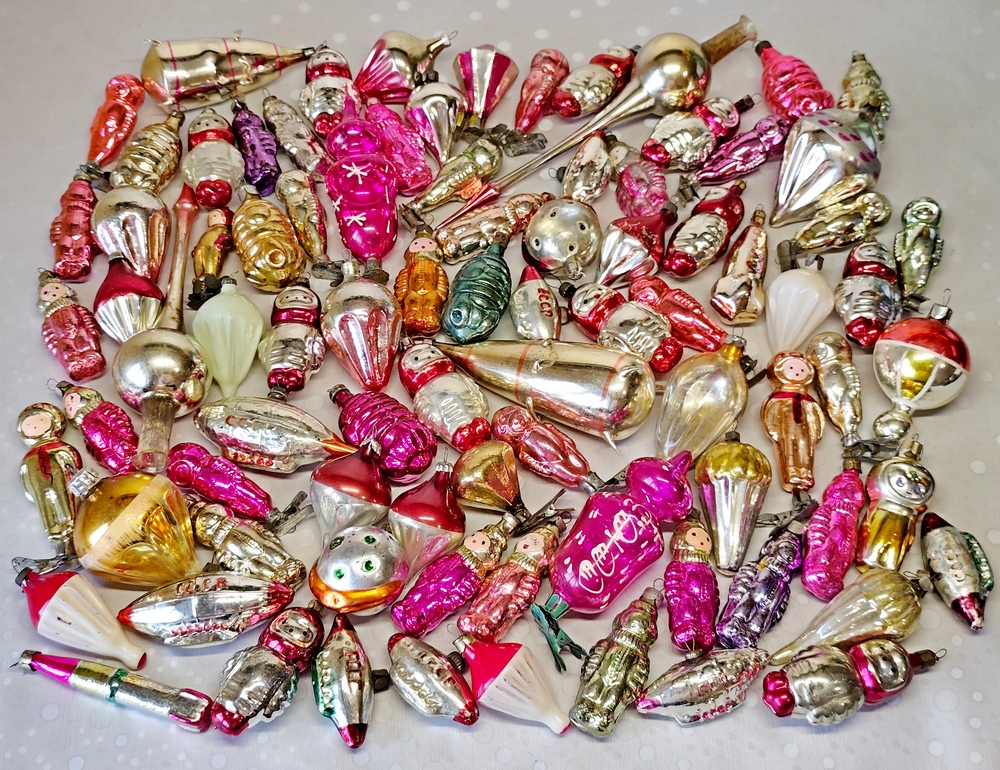
1. The Dawn of a New Era
The 1960s were a decade of wonder. While the world watched the "Space Race" through grainy television screens, the Soviet Union brought the cosmos directly into people’s homes. In the USSR, Christmas (celebrated as the New Year) became a showcase for scientific triumph. Traditional angels were replaced by silver rockets, and stars of Bethlehem were swapped for the iconic red stars of the Kremlin or gleaming Sputniks.
For a modern collector, these aren't just baubles; they are high-quality artifacts of Mid-Century Modern (MCM) design. Made from delicate "mercury glass" and hand-painted by skilled artisans, each ornament reflects the optimism of the first human steps into the unknown.
2. The Iconic Cosmonauts
The most sought-after piece in any collection is the Soviet Cosmonaut.
- The Design: Most are made using the "mold-blown" technique, where glass is blown into a metal form.
- Variations: You can find them in "full suits" with white or silver helmets, or the rarer versions with transparent face shields.
- The Rarity: Look for astronauts on metal clips (clips-ons). In the 1960s, these were the pinnacle of holiday decor. A well-preserved face with hand-painted eyes and lips can triple the value of the item.
3. Rockets, Sputniks, and Lunokhods
If the cosmonaut was the hero, the Rocket was the chariot.
- The Rocket: Usually elongated and sleek, often featuring the "СССР" (USSR) abbreviation hand-painted on the side.
- The Sputnik: A simple sphere with four long antennas. Because the antennas were incredibly fragile, finding an original Sputnik with all its "legs" intact is a true collector's dream.
- The Airships (Dirigibles): These pieces are fascinating as they bridge the gap between early 20th-century aviation and the space age. A silver dirigible on a tree represents the "Zeppelin" era of the 1930s-50s, adding a touch of vintage steampunk aesthetic to the cosmic theme.
4. The Moon and Celestial Bodies
The "Man in the Moon" is a classic theme, but the Soviet version has a distinct look. Often painted with a serene, slightly mysterious face, these crescents represent the romantic side of space travel. They were usually produced in vibrant yellows or cool silver-blue tones to mimic the moonlight.
5. Why Collectors Love "Mercury Glass"
Western collectors use the term "Mercury Glass" (or silvered glass) to describe that brilliant, mirror-like finish found on Soviet ornaments. This effect was achieved by coating the inside of the glass with a silver nitrate solution. Over decades, this silvering can age, creating a "patina" that many vintage enthusiasts find more attractive than the shiny look of modern plastic toys.
6. Identification: How to Spot a 1960s Original
When buying on Etsy or at flea markets, keep these tips in mind:
- The Cap (The Top): Authentic Soviet ornaments usually have a simple, somewhat "rough" metal cap with a wire loop.
- The Weight: Vintage glass is incredibly thin and light. If it feels heavy like a modern bauble, it might be a reproduction.
- The Paint: Original paint is usually matte or slightly translucent. Modern paints tend to be too "glossy" or neon.
How can we help?