
From Simple Huts to Fairytale Palaces: Diverse Shapes and Styles
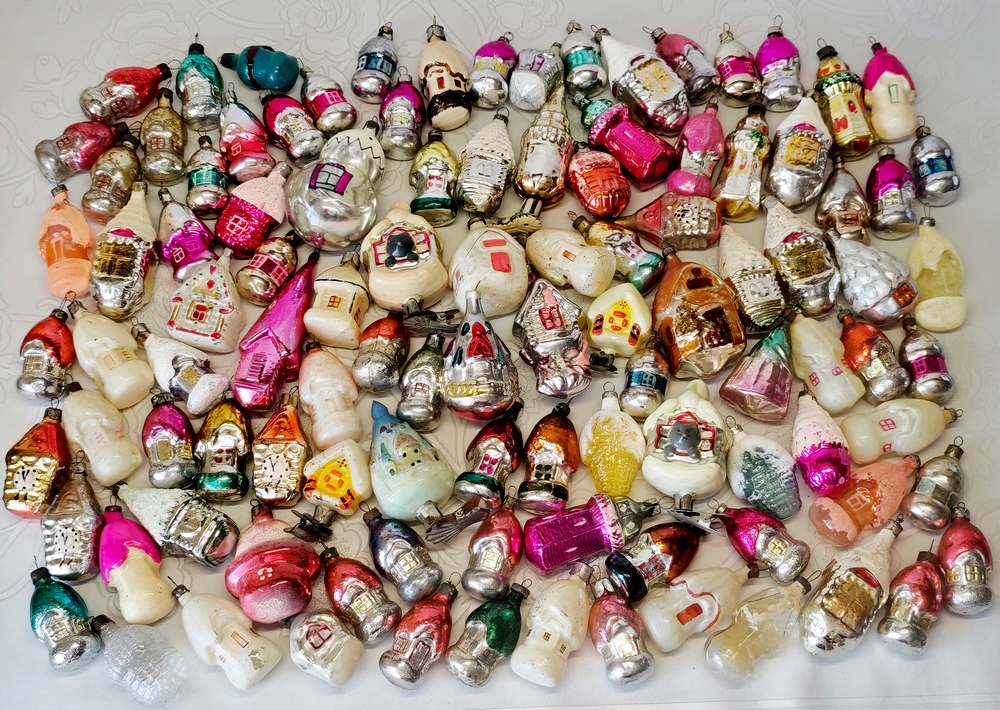
When we think of vintage holiday decor, few things capture the imagination quite like the miniature glass houses of the mid-20th century. For collectors and enthusiasts of Eastern European nostalgia, these "little dwellings" are more than just baubles; they are masterpieces of glass-blowing art, reflecting a rich tapestry of folklore, history, and architectural whimsy.
On sovietchristmas.com, we invite you to take a closer look at these fragile treasures and discover why the "Cottage" category remains one of the most sought-after niches in the world of vintage ornaments.
A Legacy in Glass: The Art of the Mercury House
The production of glass ornaments in the USSR reached its artistic peak between the 1950s and 1970s. During this era, artisans used a technique known as "internal silvering" (often referred to in the West as Mercury Glass). This gave the ornaments a mirror-like glow, making the tiny windows of these glass houses appear as if they were flickering with real candlelight.
Every piece was hand-blown and hand-painted. Because of this, no two houses are exactly alike. A stroke of white paint for snow or a dab of gold on a spire makes each ornament a unique piece of history.
From Simple Huts to Fairytale Palaces: Diverse Shapes and Styles
The variety of architectural forms in Soviet ornaments is staggering. Let’s explore the most iconic styles that you can find in our collection:
1. The Classic Winter Cottage
The most recognizable form is the humble single-story house. These often feature high-pitched roofs heavily coated with "snow" (magnesium or glitter) and tiny chimneys. They represent the idyllic image of a cozy winter retreat, deeply resonating with the "Cottagecore" aesthetic popular today.
2. The Lighthouses of Hope
Rare and elegant, glass Lighthouses stand out due to their elongated vertical shape. In the Soviet tradition, the lighthouse symbolized guidance and a safe return home. These are often decorated with bold red or blue stripes and are highly prized by collectors for their sleek, Mid-Century Modern silhouettes.
3. Grand Palaces and the Island of Buyan
For those who love grandeur, the Palace of Prince Gvidon is a crown jewel. Inspired by Alexander Pushkin’s "The Tale of Tsar Saltan," these ornaments depict the legendary city on the Island of Buyan. They feature intricate multi-tiered roofs, golden domes, and vibrant colors that reflect the opulence of Slavic fairytale royalty.
4. Folklore Icons: The Hut on Chicken Legs
No collection of Eastern European ornaments is complete without the Izbushka (Hut on Chicken Legs). This is the mystical home of Baba Yaga. These ornaments are quirky and full of character, often featuring textured "wooden" walls and the iconic bird-like legs molded into the glass base. It’s a perfect conversation starter for any Christmas tree.
5. Fairy Tale Shelters: The Squirrel’s House and Cat’s House
- The Squirrel’s House: Another Pushkin-inspired gem, this tiny "Teremok" (chamber) is where the magical squirrel cracks golden nuts. It’s usually bright, festive, and petite.
- The Cat’s House (Koshkin Dom): Based on the famous children’s play, these houses often look more "urban" and theatrical, with ornate balconies and large windows, reflecting the "Stalinist Empire" architectural style in miniature.
6. Oriental Tents and Spired Towers
Broadening the horizons, Soviet designers often looked to the East. Fairytale Tents (Shatyor) with their curved, pointed roofs and striped patterns bring an exotic flair to the tree. Alongside them, Spired Towers reminiscent of the Kremlin or medieval fortresses provide a sense of history and strength.
Why Collect Soviet Glass Houses?
Beyond their beauty, these ornaments are a smart investment. As original molds are lost and fragile glass breaks over time, the supply of authentic 1960s mercury glass houses is dwindling.
How can we help?