
The Alchemy of Glass: Unveiling the Secret "Glinka" Technique of Soviet Ornaments
The Alchemy of Glass: Unveiling the Secret "Glinka" Technique of Soviet Ornaments
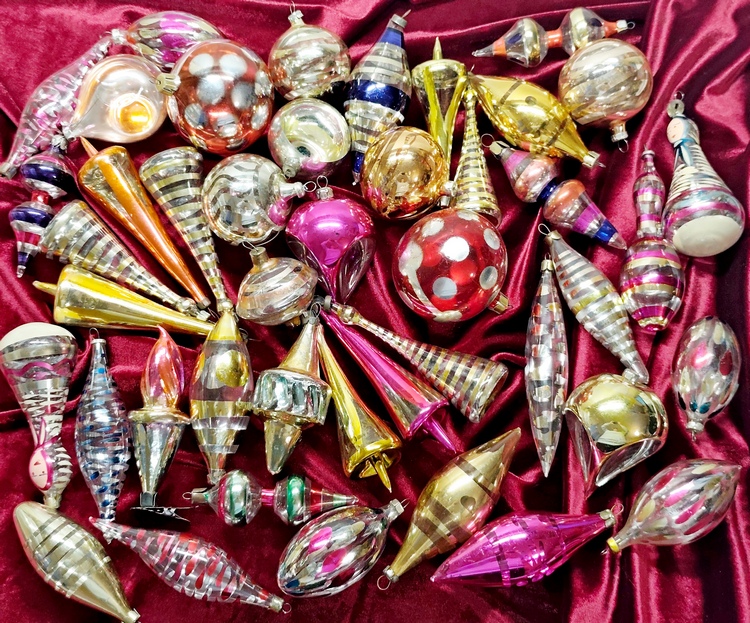
In the world of vintage holiday decor, there is a category of ornaments that whispers of a lost era of craftsmanship. They are nearly weightless, as fragile as a winter’s breath, and adorned with shimmering silver patterns that seem to float on transparent glass. Collectors know them by a single, evocative word: Glinka.
At SovietChristmas.com, we invite you to look closer at these extraordinary artifacts. The "Glinka" technique (derived from the Slavic word for liquid clay) is not just a style—it is a complex, multi-stage technological feat that represents the pinnacle of mid-century Soviet glassblowing.
The Master’s Breath: Paper-Thin Artistry
The first thing you notice when holding an authentic Glinka ornament is its impossible lightness. Approximately 95% of these ornaments were individually mouth-blown by master artisans. Unlike mass-produced molded glass, these pieces were blown to a "paper-thin" state. This extreme delicateness was a badge of honor for the glassblower, but it made every subsequent step of decoration a gamble against gravity and pressure.
The Invisible Drawing: How the Magic Happens
The "Glinka" process is a "negative" decoration technique, similar to batik in textiles or wax-resist in pottery. It followed a rigorous sequence of manual labor:
- The Clay Mask: A clear, hand-blown glass blank was coated with a fine layer of liquid clay. This served as a protective shield.
- Etching the Pattern: Using a specialized tool, the artist would manually scratch (etch) the desired pattern—spirals, stars, or geometric lines—directly into the clay, exposing the raw glass beneath.
- The Silver Bath: The ornament was then placed in a vacuum chamber where a brilliant silver amalgam (the classic Soviet mercury-look finish) was sprayed over the entire surface.
- The Final Wash: This is the most precarious stage. The ornament was washed, rinsing away the clay mask. The silver remained only on the areas where the artisan had etched the glass.
The result? A breathtaking contrast between the crystal-clear transparency of the hand-blown shell and the razor-sharp brilliance of the silvered patterns.
Why Glinka Ornaments Are Museum-Grade Rarities
Today, the Glinka technique is a lost art. It was eventually phased out in Soviet factories because it was simply too difficult and time-consuming. The high rate of breakage during the etching and washing of such thin glass made it commercially risky.
For the modern collector, a Glinka ornament is more than a decoration; it is a survivor. It survived the intense heat of the furnace, the needle-fine pressure of the artist’s hand, the washing of the clay, and decades of history.
Preserving a Piece of History
Because of their extreme thinness and age, Glinka ornaments require a level of care beyond standard vintage baubles. At SovietChristmas.com, we specialize in sourcing these technical marvels, ensuring they are preserved in their original splendor.
When you hang a Glinka piece on your tree, you aren't just adding a vintage ornament—you are celebrating a moment in history where human breath and liquid clay conspired to create something truly magical.
How can we help?